Newborn bath: step by step without the fear
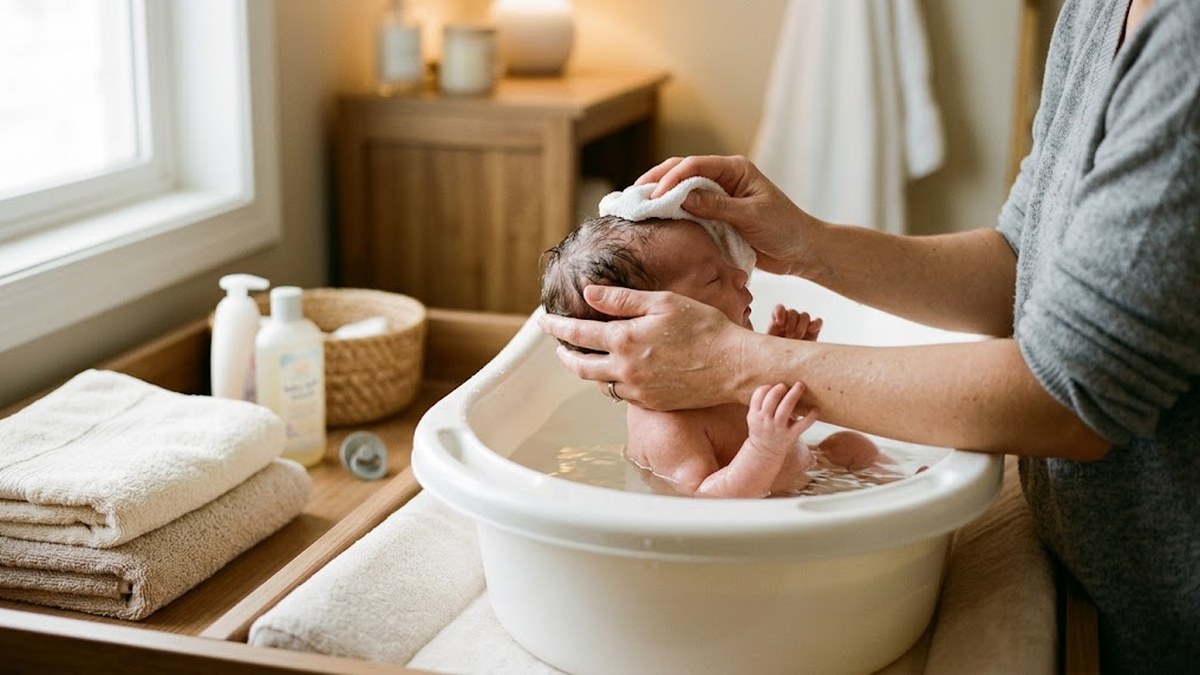
It took me almost a week to give my son his first bath on my own. I was afraid his head would slip, that I would get the stump wet, that the water would be too cold. In the end, I realized that bathing a newborn is far simpler than it looks when you get everything ready beforehand. That is what I want to share here: the step-by-step that took the fear away, the way I still do it at home today.


Before you start: lay everything out
The secret to not freezing up halfway through the bath is never having to let go of the baby, not even for a second. Set everything within reach of your hand before you undress them.
- Hooded bath towel, already open
- A fresh diaper, bodysuit and sleepsuit, opened on the changing table
- A cloth diaper to dry the face
- Neutral liquid soap and baby shampoo
- Cotton and saline solution to clean the eyes
- 70% alcohol or whatever product the pediatrician recommended for the stump
- A basin or small tub with the water already at the right temperature
If you are still putting your layette together, the baby layette list helps you see what is essential for the bath and what can wait.
The water temperature matters more than the smell of the soap
The water should be between 36 and 37 degrees, almost body temperature. Test it with the back of your hand or your elbow: it needs to be warm, never hot. And go easy on the fragrance. A newborn’s skin is sensitive and does not need perfumed soap to be clean.
A tip that saved me: a newborn does not need a bath every day. In the first days, three to four times a week is enough. On the other days, just wash the face, the neck and the diaper area, and that is it.
The room matters as much as the water. Close the window, avoid drafts and keep the room warm. If you prefer, use a space heater for a few minutes beforehand, never inside the water and never with the baby alone in the room.
The bath, step by step, without the scare
- Wash your hands and set everything up next to the tub. Check the room temperature.
- Start with the face, still with the baby dressed. Dampen a cotton ball with saline and clean one eye, from the inside out. Change the cotton for the other eye. Then wipe the face with warm water and a cloth diaper.
- Undress the baby while supporting the head with the hand that goes under the neck.
- Lower them into the tub slowly, resting the baby’s spine on your forearm and holding their arm and shoulder with your free hand.
- Keep the head above the water. Wet the body and lather with your own hand. There is no need to scrub.
- Wash the head last, with little water, and rinse the nape well, where soap tends to build up.
- Take the baby out still supporting the neck with your hand and place them straight onto the open towel.
- Dry the head first and then the folds: neck, armpits, groin and behind the ears. A wet baby gets cold quickly.
- Cover the baby, care for the stump (see below) and only then put the clothes on.
The first time, do not try to do everything on your own. Ask someone to stay nearby, to hold the towel or to take the baby out of the water at the end. Having a second pair of hands nearby takes away the rush, and rush is exactly what makes a baby slip. As you gain confidence, the bath starts taking less than ten minutes.
Many families use the bath as part of the baby sleep routine and that helps signal that night has come. If you want to build that sequence, with bath, feed and dim light, it is worth seeing how other mothers set up the baby’s room for sleep.
Caring for the umbilical stump
The stump usually falls off between the seventh and the 14th day. Until then, it needs to stay dry. After the bath, dry it well with a cloth diaper and clean the base with the product the pediatrician recommended. The diaper should be folded below the stump, so it does not trap moisture or rub.
If the stump has a strong smell, is leaking fluid or pus, or if the skin around it turns red and warm, that is the moment to call the pediatrician. Do not wait for the monthly appointment.
What to avoid when bathing a newborn
- Leaving the baby alone in the tub, even for seconds.
- Using a bath sponge, which collects bacteria and scrapes the thin skin.
- Getting water into the mouth, ears or nose with the shower head.
- Warming the water with the baby in it. Adjust the temperature beforehand.
- Applying talc between the folds. Most pediatricians no longer recommend it.
Frequently asked questions
Can I bathe my baby every day?
You can, if the skin does not dry out. But it is not mandatory. In the first months, every other day works well. Very dry skin calls for a shorter bath and warmer water.
My baby cries a lot during the bath. Am I doing it wrong?
Most of the time it is cold or discomfort, not a mistake. Have the towel and clothes ready, close the window and warm the room first. With time, most babies relax and even enjoy the water.
Do I need to wash the head every day?
No. Two to three times a week is enough. If the yellowish flakes of cradle cap appear, the pediatrician may recommend a specific oil or shampoo to loosen them gradually.
The bath feels scary in the first days, and feeling that way is normal. With time you get into your baby’s rhythm and the bath becomes one of the nicest parts of the routine. And it is worth repeating: any doubt about the skin, the stump or an inflamed stump is a matter for the pediatrician, never for the internet.
Ferramentas grátis para esta fase
- Calculadora de idade gestacional e data do parto Descubra em quantas semanas você está e a data provável do parto.
- Contador de contrações (trabalho de parto) Cronometre a duração e o intervalo das contrações.
- Calculadora de IMC (e ganho de peso na gravidez) Calcule o IMC e veja a faixa de ganho de peso de referência.