How to Prepare Your Baby’s Nursery for Better Sleep
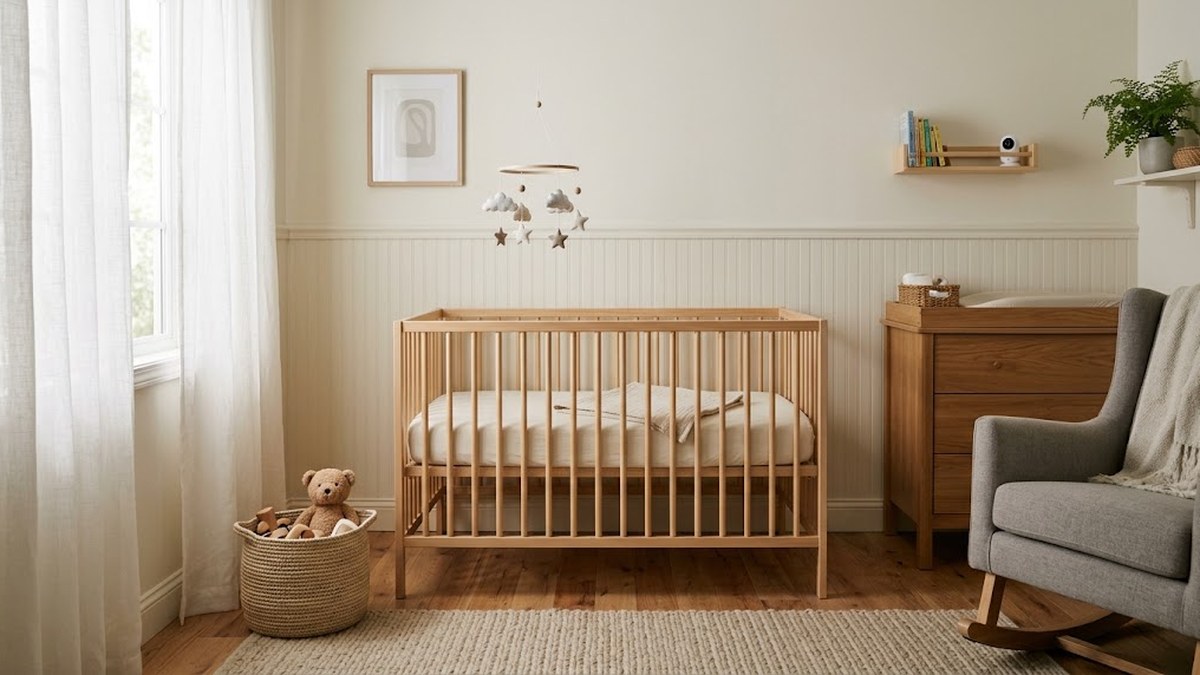
Before the baby arrives, we set up the nursery thinking about decoration. After they’re born, we realize that what matters most is how much this room helps them sleep. Preparing your baby’s nursery for better sleep is simpler than it seems and makes a difference in the whole family’s nights.
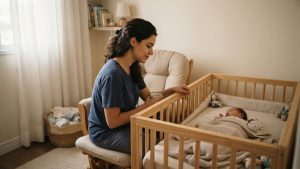

The right light at the right time
Light is one of the strongest cues for the brain to understand that it’s time to sleep. During the day, keep the room bright and sunny, so your baby can tell the periods apart. At night and during naps, darken the room as much as you can. A blackout curtain helps a lot, especially in the summer months and for late-afternoon naps.
For night feeds and changes, use a weak auxiliary light instead of turning on the ceiling light. That way you can see enough to care for your baby without sending the signal that the day has begun.
Temperature and ventilation
Babies feel cold and heat just like we do, and too much clothing bothers them as much as contact with a cold surface. Keep the room at a pleasant temperature and dress your baby with one more layer than you’re wearing, without overdoing it.
- Let the air circulate, without drafts blowing directly on the crib.
- Prefer cotton fabrics for the sheet and pajamas.
- Avoid loose blankets and pillows, which are not safe for small babies.
Practical tip: do a comfort test by touching the back of your baby’s neck. If it’s warm and sweaty, they’re too hot. If it’s cold, they may need one more layer. Hands and feet are usually naturally cooler and are not the best reference for judging temperature.
Ambient sound in the nursery for sleep
Absolute silence isn’t a friend of baby sleep. In the mother’s womb they heard many sounds, and continuous, gentle white noise can help calm them and connect one sleep cycle to the next. What matters is keeping the volume low, away from the crib, and not depending on it for every nap, so your baby can also sleep in other places.
Household noises, like the washing machine and distant conversation, usually bother them less than we imagine. There’s no need to tiptoe down the hallway. A little ambient sound helps your baby adapt to life at home.
Every baby has a different tolerance for sound. Some sleep anywhere, others need a bit more silence. Observe yours, adjust little by little and avoid depending on a single resource for all the day’s naps.
A safe crib in the nursery for sleep
In the crib, safety comes before aesthetics. The general recommendation is a firm mattress, fitted to the size of the crib, with no gaps, and with a surface free of loose objects. A crib full of pillows, stuffed animals and blankets looks good in a photo but increases the risks. Keep these items in the room’s decoration, on shelves and furniture, far from where your baby sleeps.
Also avoid soft or overly large mattresses, which can create spaces between the mattress and the bars. A well-fitted sheet, with no excess, is enough. Fewer items in the crib means more safety for your baby.
If you’re still putting together your baby’s supplies and want to check the essentials, the baby essentials checklist helps you organize what really makes a difference in the routine, including what to leave out.
A calm corner before sleep
Set aside a corner of the room or a nearby space for the last activities before sleep: an armchair for feeding, some quiet music and the same sequence every time. That’s when your baby understands the day is ending. If the routine is still confusing, reviewing the sleep routine by age and the article on when your baby starts sleeping through the night gives you a direction to organize times and expectations.
Remember that the environment helps, but it doesn’t work miracles. It adds to your baby’s age, temperament and rhythm. A well-prepared nursery offers the conditions for sleep to happen, without turning the night into a test of effort.
Frequently asked questions
Do I need to make the room completely dark?
The darker the better for sleep, but it doesn’t have to be pitch black. A comfortable dimness already helps. Leave a weak light for night changes and keep natural light coming in during the day, so your baby can organize their rhythm.
Can I put stuffed animals and pillows in the crib?
They are not recommended for small babies during sleep. Loose objects can cover the face and interfere with breathing. Use these items in the room’s decoration, on shelves and furniture, away from where your baby sleeps.
Is white noise safe for sleep?
When used with good sense, yes. Keep the volume low, like that of a distant shower, and place the device away from the crib. Also avoid leaving it on all the time, so your baby doesn’t depend on it to fall asleep.
Building a room that helps your baby sleep is about adjusting light, temperature, sound and safety, without setting aside the identity of your home. Start with the items that matter most, like darkening and a safe crib, and adjust the rest as the routine emerges. For doubts about sleep and safety, the pediatrician is the best source for your case.
Ferramentas grátis para esta fase
- Calculadora de idade gestacional e data do parto Descubra em quantas semanas você está e a data provável do parto.
- Contador de contrações (trabalho de parto) Cronometre a duração e o intervalo das contrações.
- Calculadora de IMC (e ganho de peso na gravidez) Calcule o IMC e veja a faixa de ganho de peso de referência.