Baby essentials checklist: complete list and how much to buy of each piece
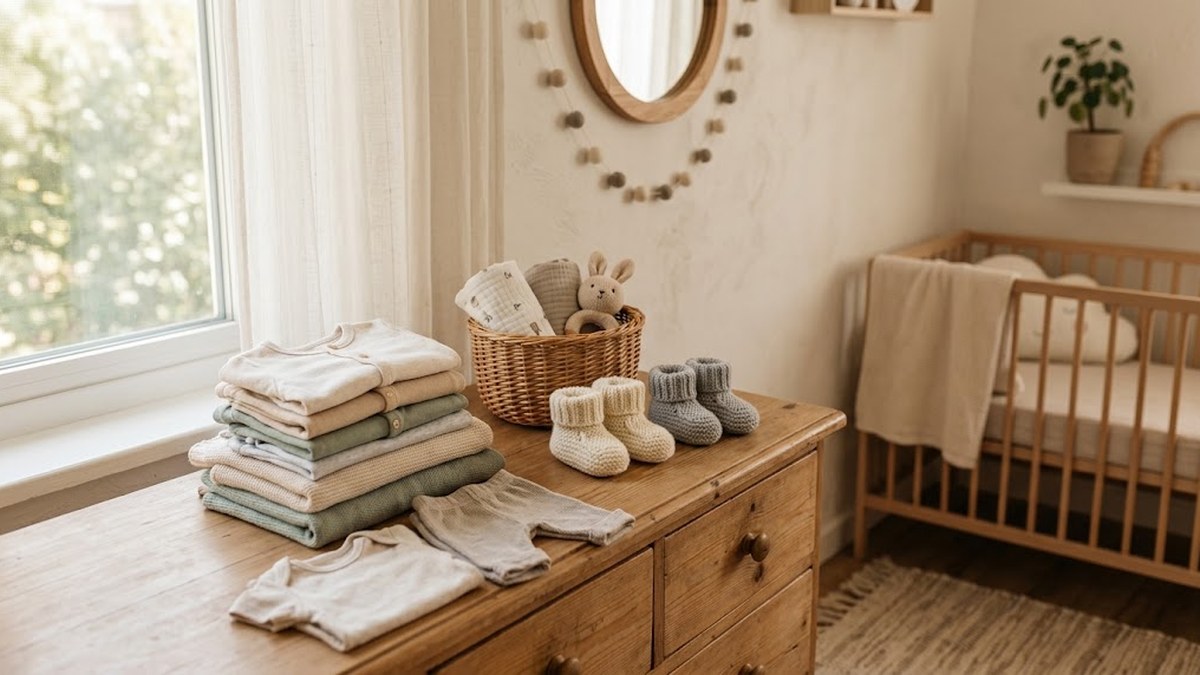
When I found out I was pregnant, the first thing I did was open a spreadsheet and start the complete baby essentials checklist. Before long it already had more than two hundred items, and I felt lost for not knowing what was essential. After going through it and talking to many mothers, I learned that the right checklist is the one that serves your daily life, not the one that looks pretty in a photo.


In this guide I gathered what I really used, with suggestions on how much to buy of each piece and what can wait for later. The quantities are approximate reference ranges, based on the experience of those who have lived through this phase, and not fixed rules. Every baby and every home works in its own way.
Where to start the checklist without spending too much
The biggest trap is buying everything at once, months in advance, before you know your baby’s routine. I bought dozens of newborn-size bodysuits and, when my daughter was born on the bigger side, half of them never even went on her body. The best path is to split the list into two groups: what needs to be ready before the baby arrives and what can be bought in the first weeks.
Before filling your cart, it is worth understanding the difference between making a list and working out the real cost. To organise your budget, start by reading about how much a baby costs in the first year and only then decide how much to invest in each item.
Complete baby essentials checklist: how much to buy of each piece
The table below gives a quantity reference for the first three months. These are approximate numbers, thought out for those who do laundry two or three times a week. Adjust them to your reality, your baby’s size and the season they are born in.
| Item | Suggested quantity | Note |
|---|---|---|
| Short-sleeve bodysuits | 6 to 8 | the everyday base |
| Long-sleeve bodysuits | 4 to 6 | ideal for cold weather |
| Pyjama sleepsuits | 5 to 7 | sleep and night |
| Trousers or baby leggings | 4 to 6 | to match with the bodysuits |
| Socks | 5 to 6 pairs | one always goes missing |
| Hats | 2 to 3 | leaving the maternity ward |
| Bibs | 8 to 10 | you can never have too many |
| Disposable diapers | 1 newborn pack and 1 size 1 pack | don’t overstock |
| Hooded bath towels | 2 to 3 | changed often |
| Changing pads | 3 to 4 | support on the changing table |
| Swaddle or blanket | 2 to 3 | varies with the climate |
| Crib sheets | 3 to 4 | changed weekly |
| Coming-home-from-hospital outfits | 2 to 3 | one for the photo |
| Sterile gauze | 2 packs | cleaning and drying |
| Hygiene kit | 1 of each | cotton swabs, cotton wool, small brush |
| Diaper rash cream | 1 to 2 | used a lot at the start |
| Thermometer, nasal aspirator and small scissors | 1 of each | first care |
Clothes: what actually comes out of the drawer
In the first months, less is more. Babies grow fast and a good part of the clothes only lasts a few weeks. I regretted buying many complete outfits and ended up living in bodysuits and sleepsuits, which are practical for changing a diaper in the middle of the night.
- Prefer cotton fabrics, soft and easy to wash.
- Stay away from pieces with many buttons, stiff zips or scratchy lace.
- Buy little in newborn size and more in the next size up.
- Wash everything before use, with a mild soap.
- Accept used clothes from people you trust, they save the budget.
Hygiene, sleep and coming home from the hospital
Besides clothes, the list includes items you will use every day. It is worth thinking about the baby’s comfort and your own practicality, because at the start the tiredness is huge.
- A baby bath or newborn bath support.
- Neutral liquid soap and baby shampoo.
- The product recommended by the care team for umbilical stump care.
- A humidifier, if the air in your home is dry.
- A Moses basket, crib or playpen with a firm and suitable mattress.
- A large cloth to support breastfeeding and changes.
If breastfeeding is your path, the first days call for patience and information. It is worth reading about breastfeeding in the first days before the baby arrives, because the correct latch prevents a lot of pain and frustration.
What can wait until later
Not everything needs to be ready the day before. Many items only make sense once you know your baby and notice what your routine asks for. Buying later also helps you avoid spending on things that won’t be used.
- High chair and solid-food-introduction items.
- Baby walker, play mat and large toys.
- A stock of larger diaper sizes.
- Future-size clothes, bought far too far in advance.
- Stroller and infant car seat, ideal to try out in a physical store.
About sleep, you can plan little by little. Understanding the baby sleep routine by age helps you set up a suitable environment without spending on cribs and accessories that don’t fit your daily life.
Frequently asked questions about the baby essentials list
How many bodysuits does a baby really need?
For the first months, between 6 and 8 short-sleeve bodysuits and 4 to 6 long-sleeve ones usually do the job if you do laundry two or three times a week. The exact number depends on how many changes a day your baby has.
Do I need to buy everything before the birth?
No. The essential thing is to have the basics for the first week: little clothes, diapers, hygiene items and a safe place for the baby to sleep. The rest can be bought as the need appears.
Is it better to buy the baby essentials online?
It depends on the item. Clothes and hygiene products usually come out cheaper online, but for the stroller, crib and infant car seat it is worth seeing them up close before deciding. Compare prices and take advantage of sales, without rushing.
Putting together the first baby’s essentials is an exercise in balancing excitement and good sense. If you get the essentials ready and leave the rest for the first months, you will spend less and get it right more often. A baby doesn’t need a full drawer; they need to be held, clean clothes and a safe little corner to sleep in.
Ferramentas grátis para esta fase
- Calculadora de idade gestacional e data do parto Descubra em quantas semanas você está e a data provável do parto.
- Contador de contrações (trabalho de parto) Cronometre a duração e o intervalo das contrações.
- Calculadora de IMC (e ganho de peso na gravidez) Calcule o IMC e veja a faixa de ganho de peso de referência.